
.png)
.png)
What is Cai Qing in Lion Dance? The Thrilling Lettuce-Snatching Tradition Explained
So you've seen lion dancers leap, twist, and prance around at Chinese New Year celebrations or grand openings in Singapore. But what's the deal with that whole lettuce thing? You know, when the lion suddenly lunges up high, grabs some greens, and spits them out dramatically while everyone cheers?
That's Cai Qing (採青), and it's way cooler than it looks.
What Exactly is Cai Qing?
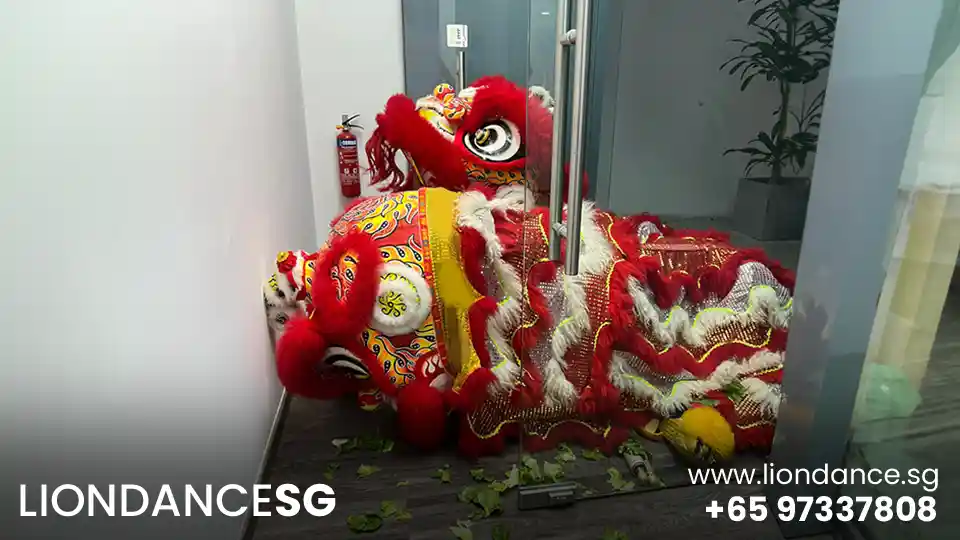
Cai Qing literally translates to "plucking the greens" in Mandarin. It's the climactic moment in a lion dance performance where the lion "eats" vegetables (usually lettuce or cabbage) along with an ang bao containing money. After munching on the greens, the lion spits out the leaves in different directions while keeping the red packet.
Think of it as the lion's way of spreading good fortune to everyone watching. The scattered lettuce symbolises the distribution of wealth and prosperity, which is pretty much what everyone wants at a business opening or Chinese New Year celebration, right?
But here's where it gets interesting: Cai Qing isn't just about grabbing some veggies. It's a test of the lion dance troupe's skill, coordination, and creativity. The higher and more challenging the setup, the more impressive the performance.
The Symbolism Behind the Greens
In Cantonese, lettuce is called "sang choy" (生菜), which sounds similar to "sang choi" (生財), meaning "growing wealth." Clever wordplay? Absolutely. But it's this kind of auspicious symbolism that makes Cai Qing such an important part of Chinese celebrations.
The act represents:
- Prosperity and wealth: The lion brings good fortune by consuming the greens
- Warding off evil spirits: The loud drumming and energetic movements chase away bad luck
- Fresh beginnings: Perfect for grand openings, Chinese New Year, and milestone celebrations
- Community blessings: When the lettuce is scattered, everyone shares in the good fortune
How Cai Qing is Performed
During a typical lion dance performance in Singapore, the Cai Qing setup can range from simple to absolutely jaw-dropping. Here's what usually happens:
1. The Basic Setup
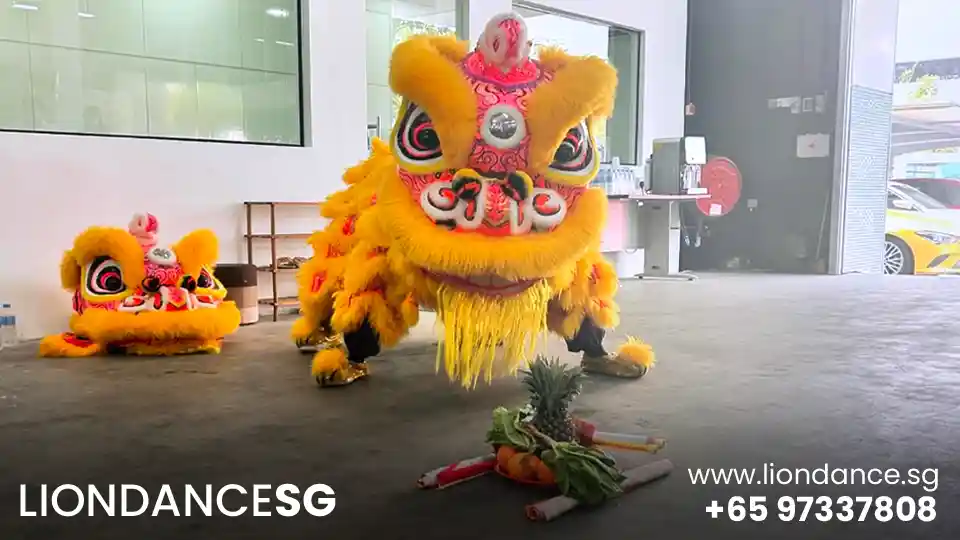
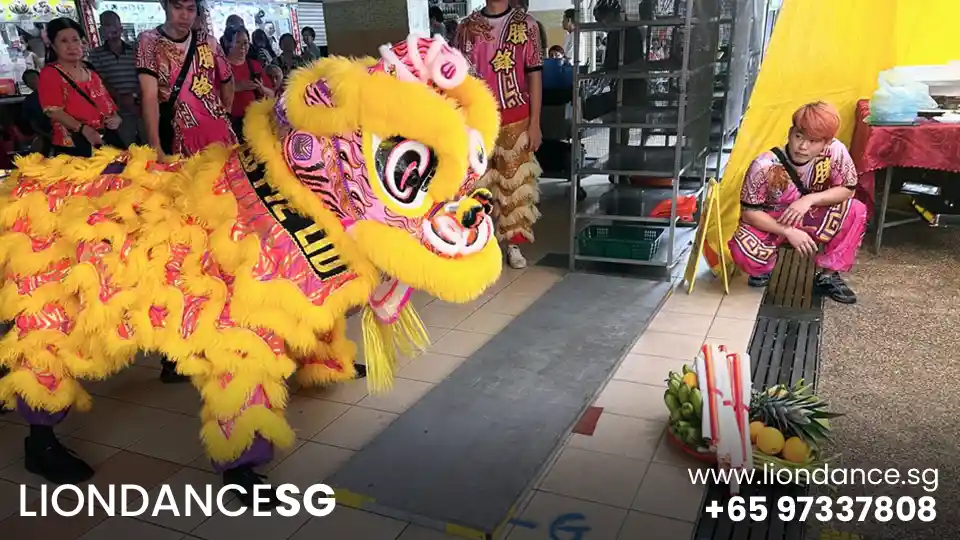
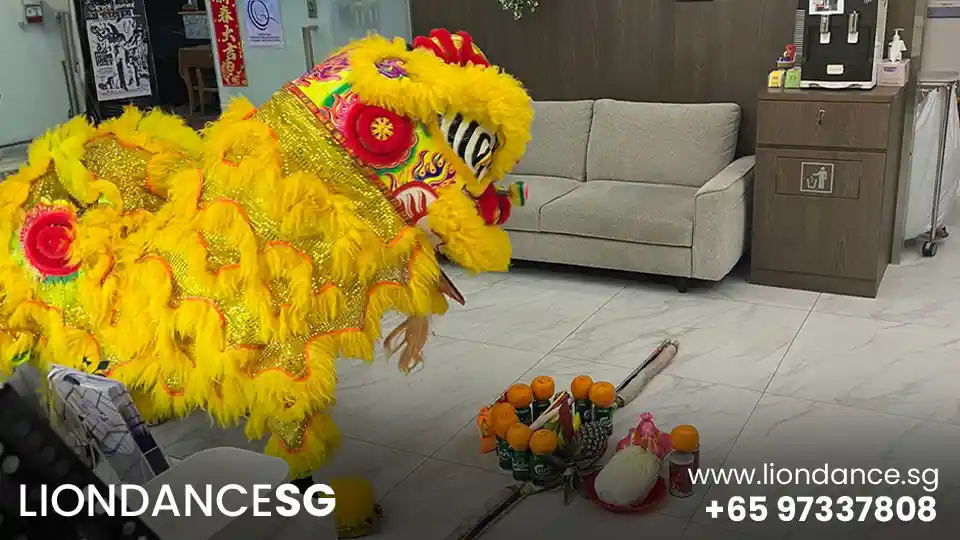
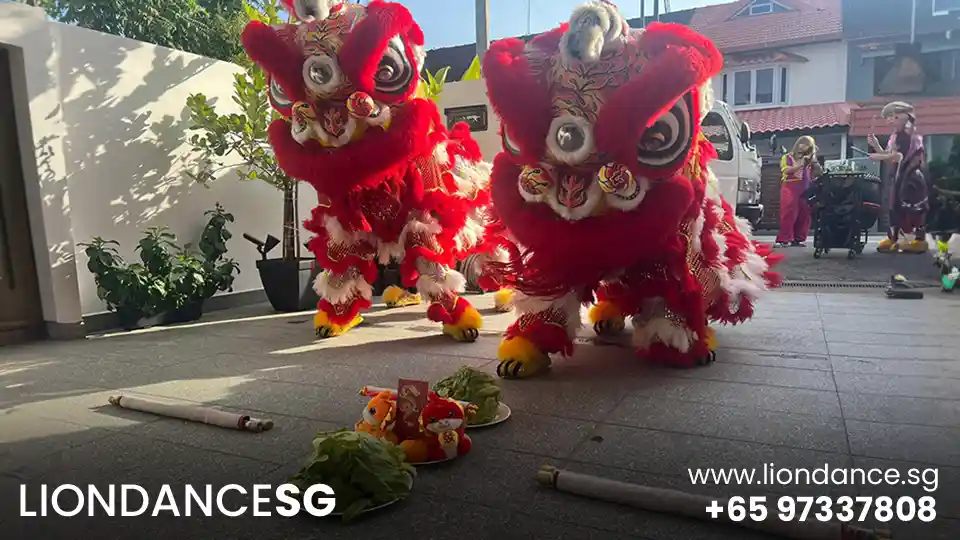
At ground level or slightly elevated, the host hangs lettuce and an ang bao from a string or pole. The lion approaches cautiously (adding dramatic flair, of course), examines the offering, then snatches it up. After a moment, the lion tears apart the lettuce and tosses it around while the drums reach a crescendo.
2. The Advanced Challenge
Now we're talking. For more elaborate performances, especially at major corporate events or shopping mall celebrations, the Cai Qing might be suspended several meters high. Lion dancers must perform on poles, platforms, or even the shoulders of other performers to reach the greens. Some setups involve balancing on precarious heights or executing acrobatic moves mid-air.
This is where you separate the amateur troupes from the professionals. The coordination between the head and tail dancers becomes absolutely critical. One wrong move and someone's taking a tumble (which is why professional lion dance troupes in Singapore always prioritise safety alongside showmanship).
Different Styles of Cai Qing
Northern Lion vs Southern Lion
In Singapore, you'll mostly see Southern-style lion dance, which is what most Cai Qing performances follow. The Southern lion is more grounded and focuses on martial arts-inspired movements. Northern lions tend to be more acrobatic and playful but are less common here.
Traditional Cai Qing
The classic approach involves straightforward retrieval of the greens with beautiful, symbolic movements. The lion might circle the offering, bow respectfully, then consume it with deliberate grace. Perfect for traditional ceremonies and formal events.
Acrobatic Cai Qing
Want to impress your guests? This version cranks everything up to eleven. Pole climbing, high jumps, human pyramids, you name it. The lion might scale a three-meter pole or leap between platforms to reach the greens. It's entertainment and tradition rolled into one spectacular display.
Modern Creative Cai Qing
Some contemporary troupes incorporate storytelling elements or themed setups. Imagine a lion navigating an obstacle course or "solving puzzles" to reach the Cai Qing. These performances add an extra layer of engagement, especially for younger audiences who might not be familiar with traditional customs.
When You Will See Cai Qing in Singapore
Cai Qing performances pop up throughout the year at various occasions:
Chinese New Year is the big one, obviously. Shopping malls, housing estates, and restaurants all host lion dance performances, and Cai Qing is always the highlight. The energy during CNY is unmatched, with multiple troupes performing across Singapore throughout the fifteen-day celebration.
Grand Openings for new businesses practically demand a lion dance with Cai Qing. It's considered essential for blessing a new venture with prosperity. Whether it's a small retail shop or a massive corporate office, that lettuce-snatching moment symbolises a successful start.
Corporate Events often feature lion dance performances for anniversaries, milestone celebrations, or important business launches. Companies understand the cultural significance and the positive impression it makes on clients and staff.
Weddings sometimes incorporate Cai Qing, especially if the couple wants to honour traditional Chinese customs. It adds a festive, auspicious touch to the celebration.
Community Events like HDB block parties, CC celebrations, and cultural festivals frequently include lion dance performances. These community gatherings are perfect opportunities to share the tradition with diverse audiences.
Check out more here: Where to Lion Dance in Singapore?
What Makes a Great Cai Qing Performance
Not all Cai Qing performances are created equal. Here's what separates a memorable show from a forgettable one:
1. Skill and Synchronisation
The head and tail dancers need to move as one unit. Any disconnect becomes immediately obvious, especially during complex maneuvers. Professional troupes spend years perfecting this coordination.
2. Musicality
The drum, gong, and cymbal players aren't just making noise-they're telling a story. Great performances match the lion's movements perfectly with the music, building tension and excitement that culminates in the Cai Qing moment.
3. Showmanship
Technical skill matters, but so does entertainment value. The best performers know how to engage the audience, build anticipation, and deliver that satisfying payoff when the lettuce finally gets scattered everywhere.
Cultural AuthenticityWhile creativity is great, respecting the traditional meanings and movements matters too. The best modern performances honor the roots while adding contemporary flair.

Booking a Lion Dance with Cai Qing in Singapore
Planning an event and want to include this auspicious tradition? Here's what you should know:
Most professional lion dance troupes in Singapore offer packages that include Cai Qing as part of the performance. Prices vary based on the complexity of the setup, performance duration, and whether you want additional elements like pole climbing or acrobatic displays.
For basic performances at residential areas or small businesses, expect something more straightforward. Corporate events with larger budgets can request elaborate setups with multiple lions, extended performances, and jaw-dropping acrobatic elements.
When booking, discuss:
- Venue space and height clearance (essential for elevated Cai Qing)
- Performance duration (usually 10-30 minutes)
- Special requests (themed costumes, specific music, etc.)
- Safety requirements (especially important for high-level performances)
Lion Dance Singapore provides professional performances across the island with various Cai Qing options to match your event's needs and budget.

The Cai Qing Setup: What Hosts Should Prepare
If you are hosting an event with Cai Qing, you will typically need to prepare:
The Greens: Fresh lettuce or cabbage, preferably with the leaves still attached and looking vibrant. Some hosts add oranges or other auspicious fruits for extra symbolism.
The Ang Bao: A red packet with money-the amount varies based on your budget and the significance of the occasion. This is your offering to the lion (well, technically to the performers).
The Setup: Decide how you want the Cai Qing displayed. Hanging from a doorway? Suspended from a pole? The higher and more challenging, the more impressive the performance, but make sure your chosen troupe can handle it safely.
Most professional troupes will advise you on the setup during the booking process, so don't stress too much about getting everything perfect.
Check out more here: What to prepare for Lion Dance Cai Qing Performance?

The Cultural Significance Today
In modern Singapore, Cai Qing represents more than just tradition-it's a bridge between generations and cultures. Younger Singaporeans might not practice every Chinese custom, but most still recognise and appreciate lion dance performances. The visual spectacle transcends language and cultural barriers, making it accessible to everyone.
The tradition also supports local performing arts. Professional lion dance troupes preserve these ancient customs while adapting them for contemporary audiences. They train new generations of performers, ensuring the art form survives and evolves.
Looking for more helpful tips? Check out some of these resources:

Common Questions About Cai Qing
Why lettuce specifically?
The Cantonese pronunciation creates that auspicious connection to growing wealth. Plus, lettuce is sturdy enough to be grabbed and torn dramatically without falling apart too quickly.
Can you use other vegetables?
Some performances incorporate cabbage or other leafy greens, but lettuce remains the standard because of its symbolic significance.
What happens to the scattered lettuce?
Guests often pick up pieces as good luck tokens. Some businesses keep a few leaves as prosperity symbols. And yes, some pieces just get swept up later-it's the symbolism that counts.
Is Cai Qing the same everywhere in Asia?
Different regions have variations, but the core concept remains consistent. Singapore's version blends influences from southern China with local adaptations.
Why Cai Qing Still Matters
In a fast-paced, modern city like Singapore, traditions like Cai Qing offer something valuable: a moment to pause, celebrate, and connect with cultural roots. Whether you're Chinese or not, there's something universally appealing about watching skilled performers execute a challenging routine while spreading good fortune.
The next time you see a lion dance performance, pay close attention when the Cai Qing moment arrives. Notice the crowd's energy shift, the drummers building intensity, and that split second before the lion lunges. That's centuries of tradition condensed into one thrilling moment.
And if you catch a piece of that scattered lettuce? Well, consider yourself blessed with a little extra prosperity. Just maybe don't try to eat it.


