.png)
.png)
Eye-Dotting in Lion Dance: What It Is and Why This Tradition Is So Important
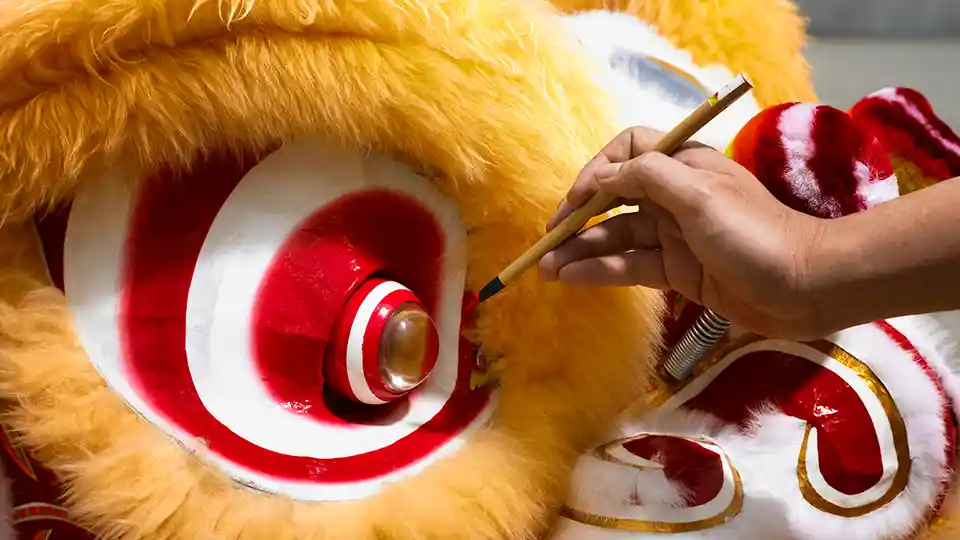
If you've ever watched a lion dance performance, the drums pounding, the cymbals crashing, the lion bouncing with infectious energy, you might've noticed a curious ceremony before all the excitement begins. A calm moment. A brush dipped in red ink. A tap on the lion's eyes, ears, and mouth. This beautiful ritual is called eye-dotting, and today we're answering the big question:
Let's dive into the history, the heart, and the hidden meaning behind this tradition that continues to thrive in Singapore and around the world.
The Origins of Eye-Dotting (Hòu Yǎn) in Lion Dance Traditions
Ancient Roots: Where the Ritual Began
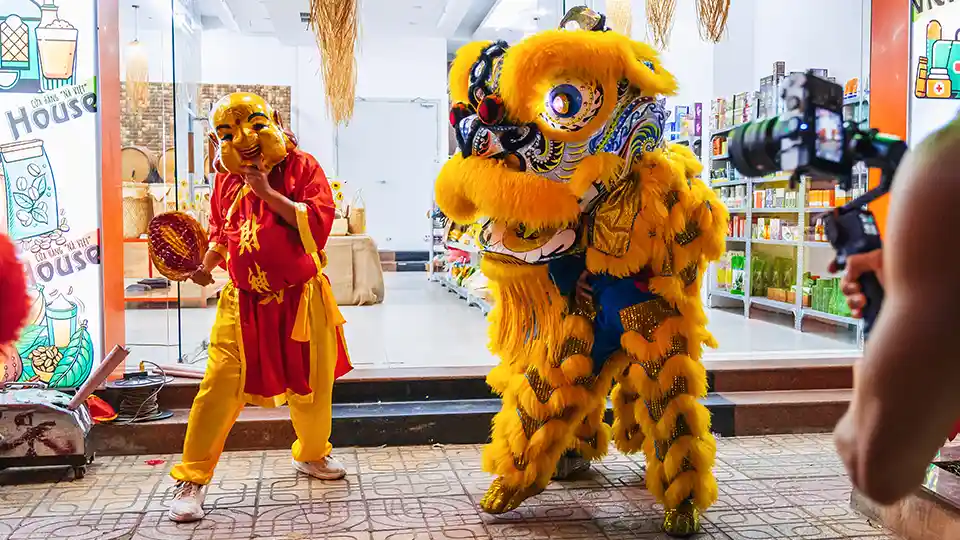
Eye-dotting, also known as "Hòu Yǎn", dates back centuries in Southern China. Think villages, festivals, and temples, lion dance was more than entertainment. It was a cultural form of protection, celebration, and connection. The eye-dotting ceremony was the symbolic moment when a crafted lion "received life" before entering the world.
Even today, lion dance troupes across Singapore honour this tradition to maintain cultural authenticity.
Cultural Influence from Southern Chinese Communities
Cantonese, Hokkien, and Teochew communities, all played a role in passing the ritual down through generations. When these communities settled in Singapore, they brought lion dance traditions with them, adapting them into the multicultural landscape we see today.
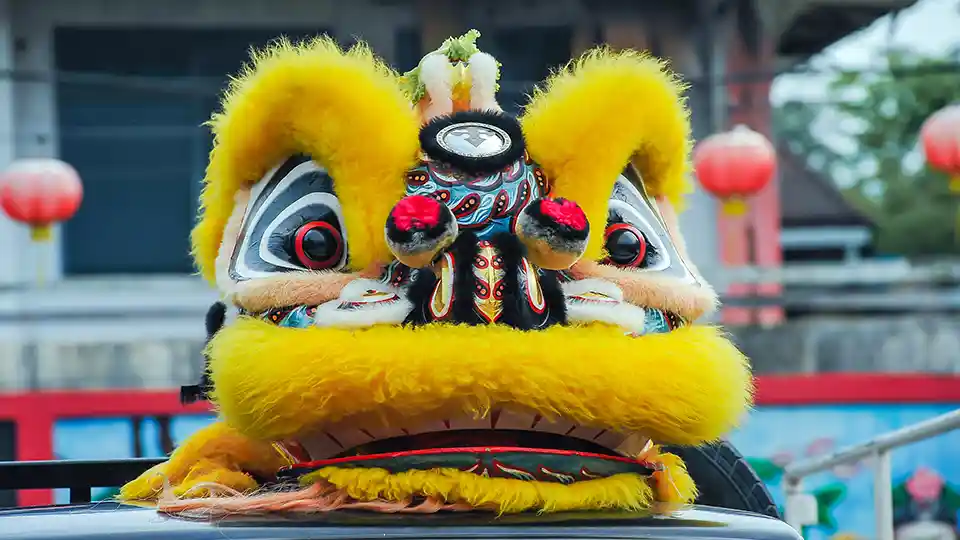
What Exactly Happens During Eye-Dotting?
Before the lion can leap and roar into performance, it must go through a respectful awakening.
The Brushes, Colours & Tools Used
Performers often use:
- A calligraphy brush
- Red cinnabar paste (symbol of life and vitality)
- Sometimes gold paint (symbol of wealth and auspiciousness)
- A ceremonial tray
- Mandarin oranges or incense (optional, depending on troupe tradition)
Red is the star here, it represents life, courage, and protection.
Who Performs the Ritual and Why It Matters
Traditionally, a respected figure is invited to do the honours:
- Business owners
- VIP guests
- Community leaders
- Seniors or elders in the family
This act symbolises granting energy, luck, and spirit to the lion, and the person who dots the lion receives blessings in return.
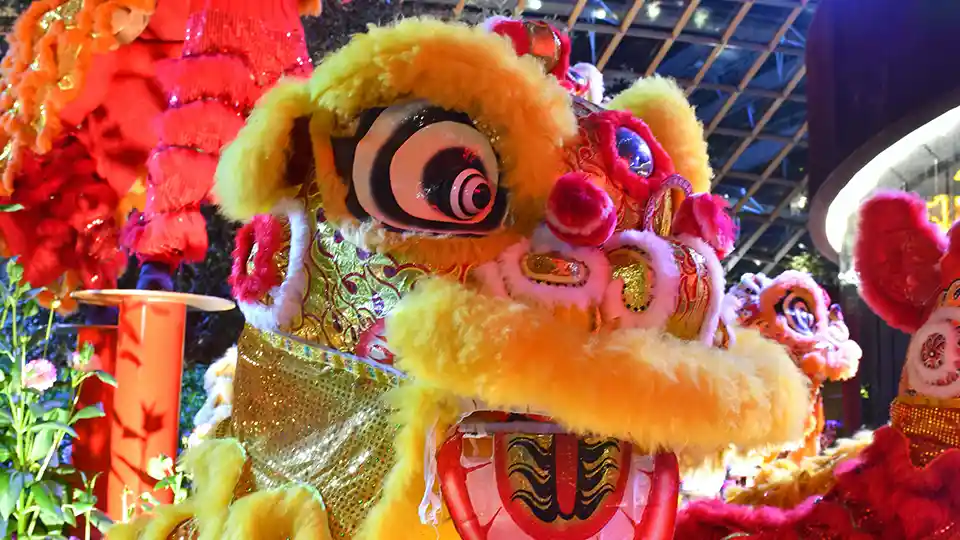
The Symbolic Meaning Behind Eye-Dotting
Awakening the Spirit of the Lion
In Chinese culture, lions are powerful protectors, even though they never existed in China. The symbolic "awakening" ensures the lion puppet becomes a guardian of joy and prosperity.
The moment the brush touches the lion's eye, the lion is believed to see.
Representing Prosperity, Protection & Good Energy
Every dot has meaning:
- Eyes → Clarity and wisdom
- Ears → Ability to listen to opportunities
- Mouth → Speaking good luck
- Forehead → Insight and intelligence
- Body → Strength and vigour
This ritual blends symbolism, spirituality, and cultural pride.
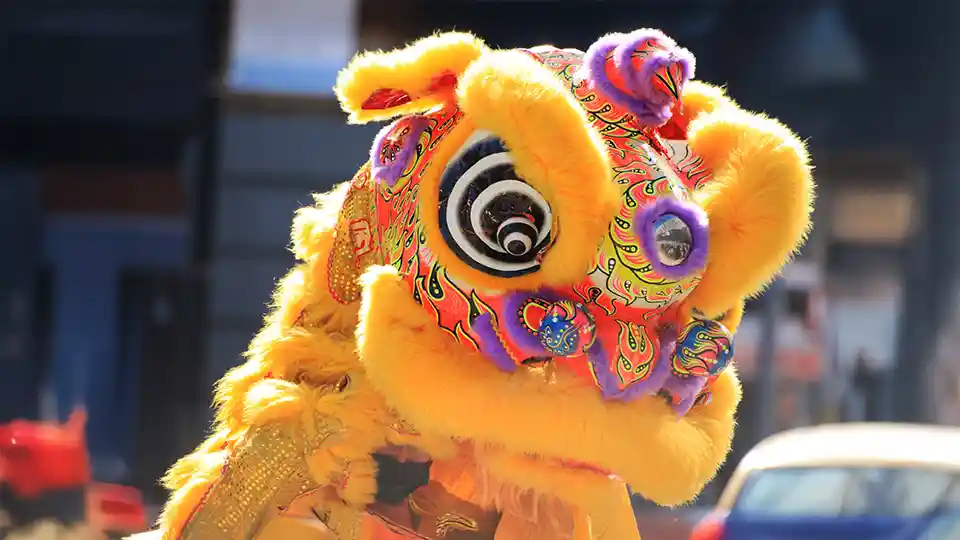
Why Do Modern Lion Dance Troupes Still Perform Eye-Dotting?
Respecting Tradition in a Modern World
Even with LEDs, modern music, and acrobatic stunts, lion dance performers still honour the ceremony. It's a way to show respect to ancestors, masters, and the art form itself.
Creating a Powerful Start to Any Performance
Eye-dotting sets the tone. It brings everyone into the moment, audience, performers, and organisers. It's a pause filled with breath, anticipation, and cultural pride before the drums take over.
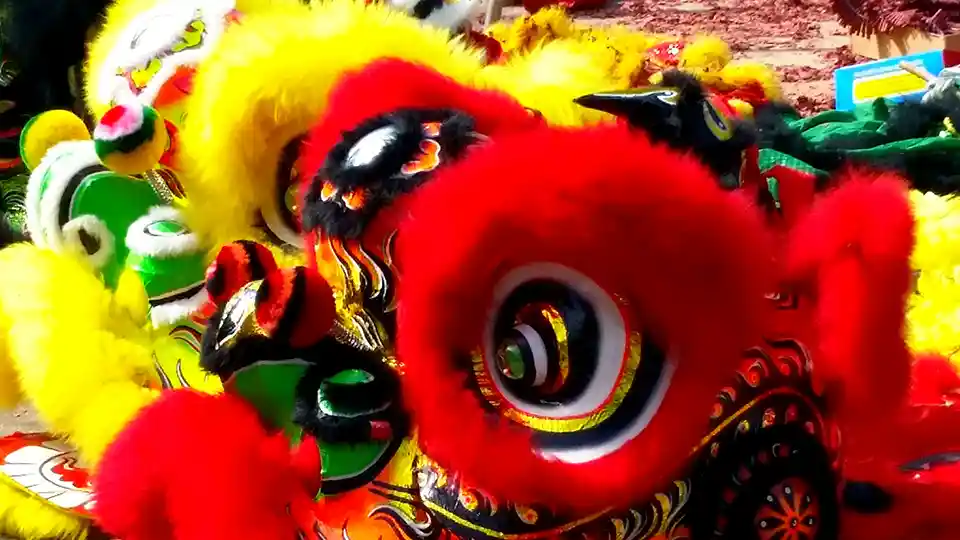
When Should You Perform an Eye-Dotting Ceremony?
Business Openings
New shop? New branch? This is one of the most popular times to awaken a new lion and bless the premises.
Festivals, Celebrations & Community Events
Chinese New Year, Mid-Autumn Festival, or even weddings, eye-dotting brings fortune and symbolic renewal.
Renovations, Blessings & Birthdays
Some families even request a mini ceremony at home to start a new chapter.
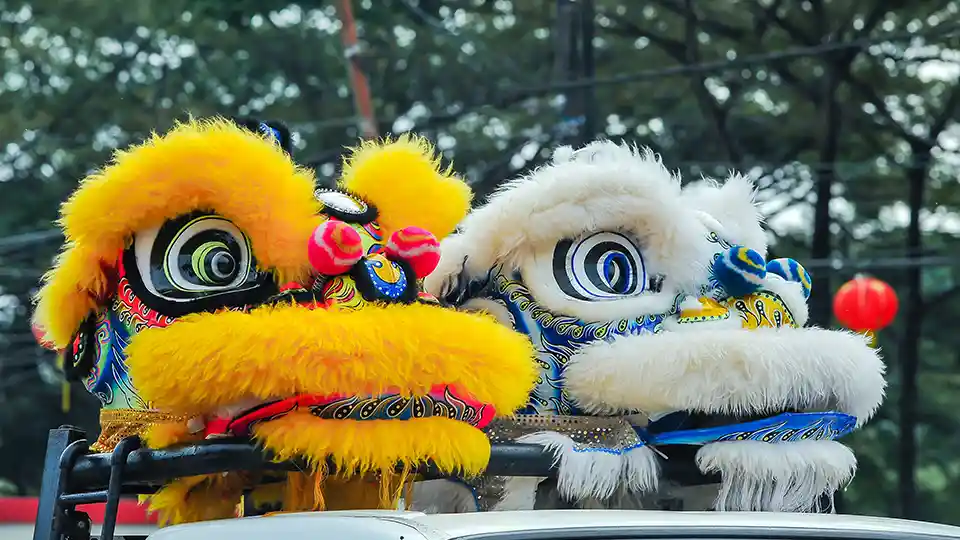
How Eye-Dotting Enhances the Lion Dance Performance
Bringing the Lion Puppet to Life
After eye-dotting, performers treat the lion differently, with more heart, more intention, and more precision. It feels like they're carrying something alive.
Boosting Performer Energy and Audience Excitement
The ritual builds momentum. The audience becomes part of the awakening. Then the music hits, and the lion bursts into action.
If you're planning an event in Singapore, check this out:
- Top 12 Lion Dance Troupes to hire for your event in Singapore
- What is the different between Lion Dance and Dragon Dance?
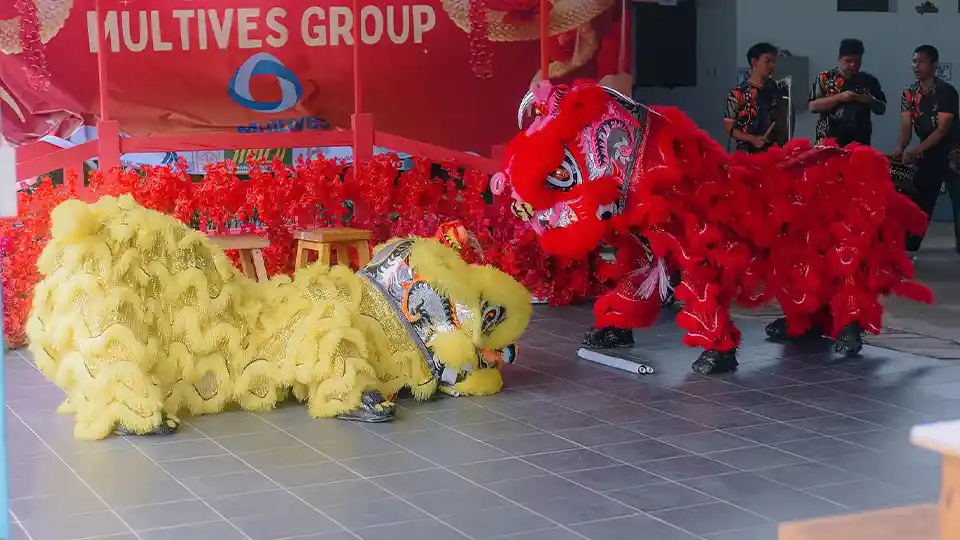
Common Misconceptions About Eye-Dotting
"Only Masters Can Do It"
Not true! While respect is important, any honoured guest may be invited.
"It's Just for Show"
The cultural symbolism is deep, meaningful, and emotional for many communities.
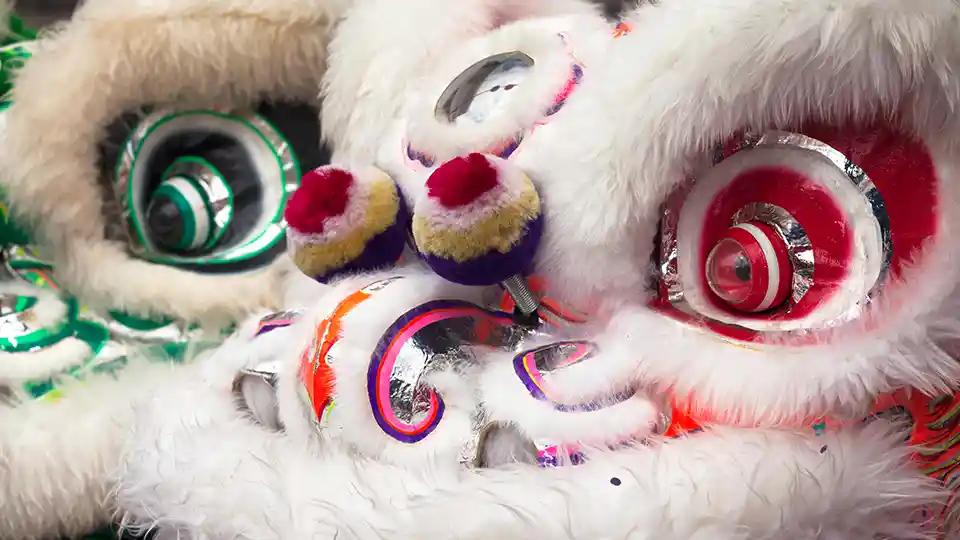
FAQs About "What is Eye-Dotting in Lion Dance and Why?"
- Is eye-dotting mandatory before every performance?
Not always, but it's required for a new lion. - Can anyone perform the eye-dotting?
Yes, typically VIPs, elders, or business owners. - Why is red ink used?
Red symbolises life, strength, and protection. - Is the ceremony religious?
It's more cultural than religious, though some troupes add prayers. - How long does the ceremony take?
Usually 5,10 minutes, depending on ritual style. - Do lions need re-dotting?
Only sometimes, such as after major repairs or long inactivity.
Final Thoughts
The eye-dotting ritual is more than a ceremonial step, it's a vibrant thread woven through centuries of lion dance tradition. It brings meaning, energy, and blessings to every performance, whether it's at a business launch in Singapore or a festive celebration across the world.
When we ask, "What is eye-dotting in Lion Dance and why?", the answer is simple:
Because it breathes life into culture, community, and celebration.